
River Thurne
A Geographical Sound led me here.
If you right click on the word ‘fjord’ in a Microsoft Word document and hover over ‘synonym’, you will see: inlet, creek, firth, and sound. All are bodies of water.
A sound is a valley that has been flooded by the sea, and a fjord is a flooded glacial valley. There are two geographical sounds in the UK, and the prospect of making an (audio) sound film about a (geographical) sound excited me. It also gave me the opportunity to engage with a river using recording equipment during a year of mostly reading and writing.
In March 2024, I camped a short walk from the River Thurne and made my way to Martham Broad via Candle Dyke, and Higham Sound. There was nothing else beyond the plan than to spend time in day-to-day life with the river and its surroundings; getting to know the environment and stumbling upon a seanchaí to learn how ‘Higham Sound’ came to be.
Within the first ten minutes of arriving, I met Ian and Joan who spoke about life beside the river, including anticipation of more flooding in the area and fears of rising water ruining homes and livelihoods. With permission, I documented our conversation using my mobile phone and we exchanged numbers so I could send the piece. Their voices appear at the beginning of the sound film and return midway. Later, as I was recording a spider web on the gate of a boat house, another resident popped out to say hello. Our hello led to a cup of tea and a flick through a local history book. They suggested I speak with a neighbour (Neil) whose family had lived here for more than 70 years, and who resides beside the Thurne all year round. Again, with permission, I documented a conversation and filmed Neil’s portrait outside of his home.
It became clear almost immediately that any plan I had to poetically engage in a ‘geographic sound’ was to be left, and instead the task was to ramble along the river (still via the aforementioned locations) and to engage in what was presented to me. These are the conditions of working with environment and place in a recorded capacity; a reciprocal process. It is the reason I work in this medium – it is always a meditation, the unfurling of daily life, sounds, a slowing down and moving with patterns of light on leaves and bark.
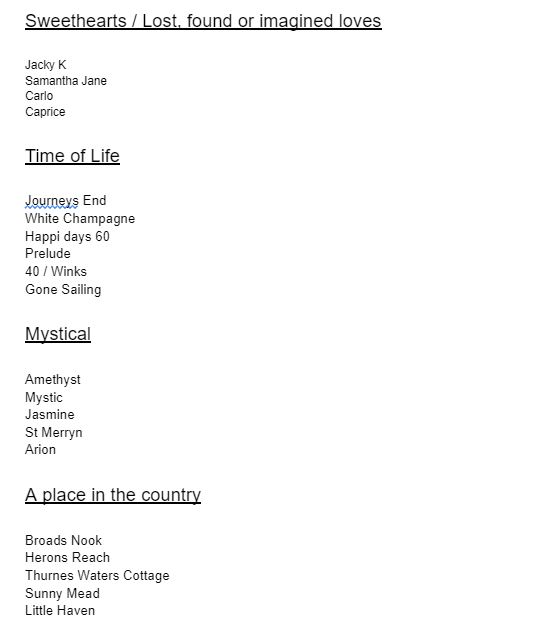
What is shown here, is a ten-minute version of a 20-minute film that was exhibited in May. My hope is that it encapsulates some of the experience by the river. I have called it a Sound Film because it was a process of listening and responding with sound equipment and a camera lens. Also found here are some studies from that time, along with friend and artist Owen Ramsay’s observations of boat house names.
River Irk
I had made River Irk a part of this study for the Sound Diaries presentation in Oxford. Yet for some reason, to me, it did not sit well within a study of another river at this moment. Comparisons are obvious – rivers with long lives needing to be held, cleaned and cared for. Rivers whose lives span centuries, whose waters have witnessed historical moments we can only imagine/read about in books. I read a poem during the presentation, some of which I will write here below as a reference point for how I am presently thinking about the river Irk.
Still within the first year of research with the Irk, I am yet to gauge the way it lives between inhabitants past and present, and below employees still in operation above its banks. I have spent this year reading and rummaging and assembling what the research is, what it does, who it is for. Conjuring up workshops and developing what feels like a network of people interested in maintaining heritage of a specific place. The second year involves community engagement – working with those living, working, and accessing the river. And it is then that I will return to River Irk through sound and frame.

For now:
I drank miles of liquid history over five short months; Industrial heritage subdued with biofilm on hard surface; organic material decomposed.
I exhaled sharp metal and chipped concrete; felt the laugh lines of cotton mills; wool lining riverbanks – milk and sunlight birth soft cream.
Mediaeval practices moved through this body of water; materials draped in time. I sanitised fluvial matter – an organic machine
nature and technology > nature as technology
when placed into hands different to my own, yet the same. The river made this dress, made my socks and this carpet. What can I make for the river in return?
Where River Goyt Meets River Sett
At home I hear two rivers calling out my name in sleep they speak softly to me a whisper through movement making sure I am gentle. Beyond sounds of domestic electric river asks me to collect. I take a saucepan and wander down cobbled corridors strained winter branches hold my skin as I descend to riverbed. Handle in one hand while the other holds fresh earth mixed with last night’s rainwater. I scoop fresh water from the Sett. Watch a while. It takes time to adjust. Cheap aluminium. I wait in a knowing way as though I understand how it feels to be inside of an appliance. River settles and I pour her back the way a fisherman returns his catch to fresh water. I watch it swim away and repeat this same gesture more than three times. We are dancing. The river, the saucepan and I. My hands become cold with winter air and I hear foot and paw steps alike on the path behind me. I scoop again this time standing upright walking away with conviction before my conscience kicks in. I am taking river to my rented home where the air is somewhere between fresh and concentrated. I latch the front door and place the river straight onto a flat electric hob. I fill another pan. A smaller of the same variety I fill it with water from the kitchen tap. I turn two dials to four placing brown rice into each pan waiting as heat rises upward warming waters, I dip my right index finger in each to test the temperature. The colour of river water is darker than tap, grit. I imagine the rivers source of Kinder Scout recall stretching my limbs and looking down while listening to streams running beside me. Smell of air and time the miles walked over this landscape. Bubbles begin to form and bump into one another popping. I open a window and hear their sounds playing with the river outside. I can’t see it from here, but I can feel and hear it. Impossible not to in this place. Water running in different directions to passing cars, factories and trains moving heavily across tracks. Disparate sounds. I turn both hobs down to three and enjoy a light simmer, water moving the surfaced starch. I take two metal spoons from a wooden drawer lowering one into river rice, the other into tap. Placing both spoons on the kitchen top I move them around, walk out of the room to forget which is river, I return. I take three breaths between each taste to discover a distinct taste of grit. Looking down at the brown rice continuing to cook, I think of other ways to collect river. I consider purchasing a filter to discard the grit. Unless I am boiling eggs. But really, what is the point in boiling eggs with river water.
Thank you: to the rivers and the residents, to Patrick Farmer, Paul Whitty, Jon Samsworth, and to Simon Knighton and my family.
